

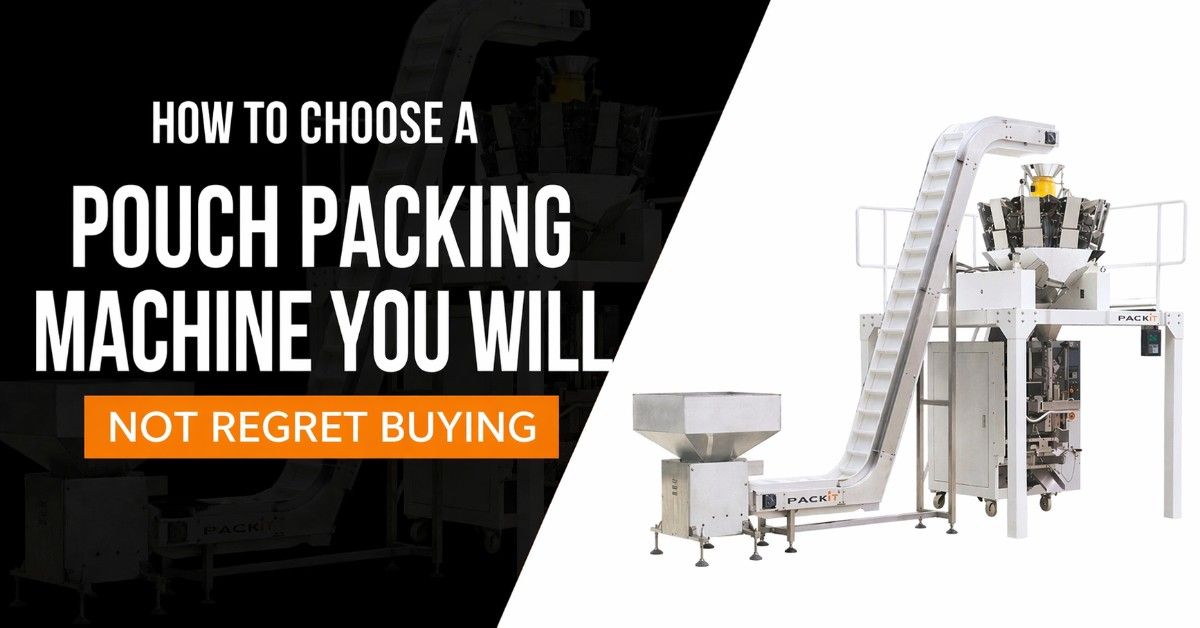
Buying a pouch packing machine is one of those decisions that looks straightforward on the surface but carries a lot of weight underneath.
Talk to any factory owner who has been through a bad purchase and you will hear the same story. The machine looked good in the brochure. The demo was impressive. But three months into production, the seals were inconsistent, downtime was frequent, and the after-sales team was unreachable.
This guide exists so that does not happen to you.
Whether you are setting up your first packaging line for a snack brand, scaling a spice business, or upgrading an old semi-automatic setup in your factory, the information here will help you make a purchase you will be confident about for years.
The Real Cost of Choosing the Wrong Machine
Before getting into how to choose, it is worth understanding what is actually at stake.
A poorly chosen pouch packing machine does not just underperform. It creates a chain of problems that quietly eats into your margins. Inaccurate fill weights mean product giveaway at scale. Weak seals mean returns from distributors and complaints from end customers. Frequent breakdowns mean missed delivery deadlines and strained business relationships.
For a namkeen brand packing 200 kg per shift, even a 5 gram overfill per pouch adds up to significant product loss over a month. For a spice company whose distributor demands batch consistency, one seal failure on a shelf can mean losing a retail account.
The machine is not just equipment. It is infrastructure. Treat the decision accordingly.
What Kind of Product Are You Packing
This is the first real question and it shapes every decision that follows.
Products fall into a few broad categories inside the packaging world and each behaves differently on a machine.
Free flowing granules like sugar, salt, rice, or popcorn move easily and work well with volumetric cup fillers. Fine powders like atta, turmeric, protein powder, or instant coffee need auger fillers that handle them without clumping or spillage. Irregular solids like chips, dry fruits, namkeen, or candy need multihead weighers that portion them gently without crushing. Sticky or coated products need special attention because they can bridge inside hoppers and cause inconsistent fills.
If you are packing multiple product types on the same line, tell the manufacturer upfront. A good automatic packaging machine can be configured with changeable filler systems, but only if that need is communicated before the machine is built or purchased.
Getting the product type right at the start is not a small detail. It is the entire foundation of the right machine choice.
Pouch Type Matters More Than Most Buyers Realize
Not every pouch packing machine handles every pouch format. This is a detail that catches a surprising number of buyers off guard.
The most common formats you will encounter are pillow pouches, flat bottom pouches, gusseted pouches, stand-up pouches, and stick packs. Each has a different structural requirement, and not all machines support all formats without additional tooling or attachments.
A VFFS machine (Vertical Form Fill Seal) is the most versatile and widely used format in food and FMCG packaging. It takes a flat roll of packaging film, forms it into a tube, fills the product, and seals the pouch, all in a single continuous or intermittent motion cycle. This is the workhorse of the packaging industry and it supports a wide range of pouch formats depending on the jaw configuration and former used.
Stick packs are a separate category, used for single-serve products like sugar sachets, protein powder servings, or spice blends, and require a dedicated stick pack machine like the SP-914.
Know your pouch format before you enter any conversation with a manufacturer. It will save you from discovering incompatibility after the machine arrives.
Film Compatibility: The Detail Nobody Talks About Enough
Your pouch packing machine seals pouches using heat. That heat has to be calibrated precisely for the type of packaging film you are using.
Common film types include BOPP, polyester, laminated films, metalized films, and multilayer co-extruded films. Each has a different sealing temperature range, a different dwell time requirement, and a different behavior under the sealing jaws.
A machine set up for BOPP may not seal a metalized film cleanly without adjustment. A machine with inconsistent jaw pressure will create seals that look fine visually but fail under even moderate handling.
Before finalizing your machine purchase, confirm that the machine has been tested with your actual film type or a close equivalent. Ask for a live trial with your film if possible. Reputable manufacturers will accommodate this without hesitation.
Sealing quality is not something to assume. It is something to verify.
Speed and Output: Read the Numbers Carefully
Machine speed is probably the first specification most buyers look at. It is also one of the most misread.
A machine rated at 80 pouches per minute is rated under ideal laboratory conditions with a lightweight free-flowing product and a small pouch size. Your actual output will depend on your product, your pouch dimensions, your film behavior, and your filler cycle time.
When evaluating an automatic pouch packing machine, ask for realistic output figures under conditions that match your actual production environment. A manufacturer who gives you honest numbers is worth far more than one who inflates the spec sheet.
Think practically. A growing snack brand running a single eight-hour shift may need 40 to 60 pouches per minute. A large spice or flour operation running three shifts with high daily targets may need 80 to 100 pouches per minute with high filler accuracy.
Choose the speed that matches your actual requirement with a reasonable buffer for growth. Do not buy far more capacity than you need right now and do not buy so close to your current need that you have no room to grow.
Accuracy and Fill Weight: Where Profit Lives
This one is simple but often underestimated.
Every gram over your target fill weight is product you are giving away for free. Every gram under is a compliance and customer satisfaction problem.
For a business packing 10,000 pouches a day at a 5 gram average overfill per pouch, that is 50 kg of product given away daily. Across a month, that becomes a significant and completely avoidable loss.
Modern industrial packaging solutions use PLC-controlled filler systems and servo-driven mechanisms to keep fill accuracy within very tight tolerances. When comparing machines, ask for the fill accuracy specification, typically expressed as plus or minus a certain number of grams, and verify it with a live demonstration if possible.
For regulated product categories like spices, protein supplements, or any product where the declared weight carries legal significance, fill accuracy is not optional.
Sealing Quality: Your Last Line of Defense
A pouch that does not seal properly is worse than no pouch at all. It creates waste, damages product reputation, and exposes you to distributor and retailer penalties.
Good sealing comes from consistent jaw temperature, consistent jaw pressure, and consistent dwell time across every single cycle. This is where servo-driven sealing systems prove their value. Unlike older pneumatic or mechanical systems, servo-driven seals maintain consistency even as the machine runs at speed for hours.
Look for machines that offer digital temperature control on the sealing jaws, adjustable dwell time settings through the HMI, and easy jaw replacement for maintenance.
If you are packing oily products like fried snacks or products with fine powder that tends to land on the seal area, ask specifically how the machine handles contamination at the seal zone. Some machines include seal area cleaning mechanisms or design features that reduce this problem significantly.
Ease of Operation and Changeover
A machine that takes four hours to change over between two pouch sizes is not really a flexible machine, regardless of what the brochure says.
For businesses packing multiple SKUs or different product types across shifts, changeover time directly impacts production efficiency. A good VFFS machine should allow operators to switch between pouch sizes or products within a reasonable window using clearly labeled mechanical adjustments and saved recipes in the PLC.
Equally important is the operator interface. Touchscreen HMIs with clear visual diagnostics reduce training time and help operators identify and resolve minor issues without waiting for a technician.
Ask the manufacturer: how long does changeover take for a typical size or product change? Can it be done by a trained line operator or does it require a skilled technician every time? The answers will tell you a great deal about the practical usability of the machine.
After-Sales Support: The Factor That Defines Long-Term Value
This is the most underrated factor in the entire buying decision and the one most buyers wish they had spent more time on.
When your pouch packing machine goes down mid-shift, what happens next? Can a service engineer reach your facility within a day? Are spare parts available locally without a weeks-long import wait? Does the manufacturer offer remote diagnostic support to help your operator troubleshoot quickly?
These questions sound administrative. They feel very real at 2 AM when a production deadline is approaching and the machine is not running.
Before finalizing any purchase, verify the manufacturer's after-sales infrastructure. Check whether they have a service team that covers your region. Ask about spare parts availability and typical lead times. Request references from existing customers and speak to them about their actual service experience, not just the machine performance.
A machine from a manufacturer with strong after-sales support is a significantly safer investment than a slightly better machine from one that goes quiet after delivery.
How VS PacKit Approaches These Challenges
VS PacKit by VS International has spent over two decades building pouch packing machines and VFFS machines that operate in real production environments across India's most demanding food and FMCG brands.
Their client list includes Haldiram's, Parle, Patanjali, Bikanervala, Cadbury, and dozens of other manufacturers who depend on consistent, high-volume packaging output every single day. That level of trust does not come from brochure promises. It comes from machines that actually perform and a support team that shows up when it matters.
VS PacKit machines are built with servo-driven sealing systems, PLC automation, and user-friendly touchscreen interfaces that reduce operator training time and improve consistency across shifts. With two design patents and several more in progress, their commitment to engineering innovation is reflected in machines that solve real production problems rather than simply meeting spec sheet benchmarks.
From the Komet 81 and Indus 5000 for high-volume VFFS applications to Servo Auger Fillers for powder products, Volumetric Cup Fillers for granules, and the SP-914 Stick Pack Machine for single-serve formats, VS PacKit offers a comprehensive range of industrial packaging solutions that can be matched precisely to your product type, output requirement, and packaging format.
For manufacturers across India looking for a reliable, scalable, and well-supported automatic packaging machine, VS PacKit is a name with the track record to back it up.
A Practical Checklist Before You Buy
Use this before signing anything:
Confirm your product type and get the manufacturer to recommend the correct filler system for it. Test your actual packaging film on the machine or request a film compatibility confirmation in writing. Ask for realistic output speed under your specific product and pouch size conditions. Verify fill accuracy specifications and request a live demonstration. Check changeover time between pouch sizes and assess whether it suits your SKU range. Speak to at least two existing customers of the manufacturer about their real service experience. Confirm spare parts availability and typical lead times for your region. Understand the warranty terms and what is and is not covered.
Final Thoughts
A pouch packing machine is not just a piece of equipment you add to your production floor. It is a long-term decision that directly affects your product quality, operational efficiency, and brand reputation.
Take the time to understand your product. Verify the specifications. Ask the hard questions about service and support. And choose a manufacturer whose machines have actually been tested in environments like yours.
If you are ready to invest in a packaging solution that performs reliably from day one and scales with your business, VS PacKit by VS International is ready to help you find exactly the right fit.
Contact VS PacKit today and speak with a packaging expert who understands your industry.