

There is a quiet but powerful force shaping the food and FMCG industry in India and most people never think about it.
It is not the brands on the shelf. It is not the distributors moving goods across cities. It is the packaging machine manufacturers who build the equipment that makes everything possible at scale.
Every packet of namkeen you open, every pouch of atta you buy, every sachet of spice you tear apart on your kitchen counter came off a packaging line built by someone who engineered that machine with precision, tested it under pressure, and delivered it to a factory floor where it now runs thousands of cycles every single day.
The best manufacturers in this space do not just build machines. They set the standard for how an entire industry operates. This blog explores exactly how they do it and what separates the leaders from the rest.
The Standard Is Not a Document. It Is a Practice.
When people talk about industry standards in manufacturing, they often think about certifications, compliance checklists, or regulatory approvals. Those things matter but they are the floor, not the ceiling.
The packaging machine manufacturers who genuinely lead their industry operate with a standard that goes beyond paperwork. It lives in their engineering decisions, their material choices, their testing processes, and their relationship with the production realities their clients face every day.
A food manufacturer in Punjab running three shifts a day cannot afford a machine that performs beautifully in a controlled demo but struggles with real-world variables like ambient temperature fluctuations, operator variability, or slight inconsistencies in film roll quality. The machines that become industry benchmarks are the ones built to handle those variables without flinching.
That gap between demo performance and real-world reliability is where standards are actually set.
Engineering That Starts With the Problem, Not the Product
Ask any engineer at a top-tier packaging machinery company what they think about first when designing a new machine and the answer is rarely a technical specification. It is almost always a production problem.
What is causing seal failures on high-fat snack products? Why do certain powders bridge inside hoppers and create inconsistent fill weights? How do you maintain pouch dimension accuracy when film tension varies across a roll?
The best packaging machine manufacturers in India and globally have built their reputations by treating these problems as engineering challenges worthy of serious investment. They run internal R and D programs. They study failure patterns from their installed base. They iterate on designs not because a customer complained but because they saw a better way before the complaint ever arrived.
This approach to engineering is what produces innovations like servo-driven sealing systems, which deliver consistent jaw pressure and temperature across every cycle regardless of machine speed. It is what drives the development of PLC-based automation that lets a factory operator call up a saved recipe for a different pouch size in seconds rather than spending an hour on manual adjustments.
These are not features. They are solutions to real problems that manufacturers discovered by being deeply embedded in the production environments their machines operate in.
Material and Component Quality: Where Standards Live in the Details
A packaging machine is only as reliable as its weakest component. This is a statement that sounds obvious but is consistently underestimated by buyers who focus exclusively on the headline specifications.
Leading packaging machine manufacturers make deliberate and defensible choices about the components that go into their machines. They specify stainless steel contact surfaces for food-grade applications because it matters for hygiene and longevity. They select servo motors and drives from proven global brands because the performance envelope is documented and consistent. They engineer their electrical panels to handle the voltage fluctuations common in Indian industrial facilities because that is the real world their machines operate in.
These choices add cost in the short term. They prevent far greater costs over the machine's operational life.
The manufacturers who cut corners on components rarely advertise that fact. You discover it when a motor fails at the 18-month mark, when a seal jaw warps under sustained high-temperature operation, or when a PLC throws unexplained errors because the hardware was not rated for the ambient conditions in a working factory.
Buyers who understand this look past the brochure. They ask about component sourcing. They ask about design life for wear parts. They ask what the machine is built with, not just what it can do.
Innovation as a Competitive Obligation
The packaging industry does not stand still. Consumer trends shift. New product formats emerge. Retailers demand new pouch styles. Regulations evolve. The brands that manufacture food, FMCG goods, and industrial products need their packaging lines to adapt.
The packaging machine manufacturers who lead this industry understand that innovation is not optional. It is the price of continued relevance.
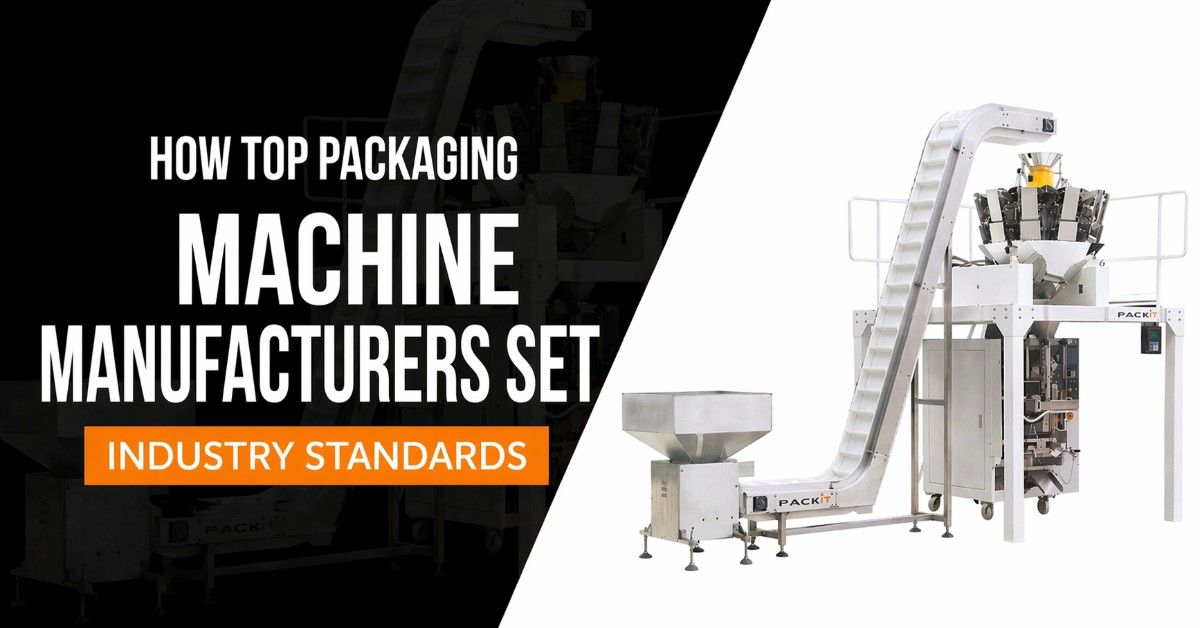
This plays out in several visible ways. The development of multihead weigher integration into VFFS lines allowed food manufacturers to handle irregular solid products like chips, dry fruits, and candies with dramatically better fill accuracy than was previously possible with volumetric systems. The shift toward servo-driven forming and sealing removed the mechanical variability that older cam-driven systems introduced at high speeds.
More recently, the demand for flexible packaging formats has pushed leading manufacturers to design machines that can handle a wider range of film structures, including high-barrier multilayer films for products with extended shelf life requirements. The integration of IoT-ready control systems is beginning to allow factory managers to monitor machine performance data remotely, identify efficiency losses before they become breakdowns, and plan maintenance proactively rather than reactively.
The manufacturers who invest in these capabilities do not just serve the market as it exists today. They help define what the market looks like tomorrow.
Consistency Across Scale: The True Test of a Standard
It is relatively straightforward to build one excellent machine. The genuine test of a manufacturer's standard is whether they can deliver that same quality consistently across every machine they produce, whether it is the tenth unit or the ten thousandth.
This is where manufacturing process discipline becomes critical. Leading packaging machine manufacturers implement structured quality control at every stage of production, from incoming component inspection to sub-assembly testing to final machine commissioning. They document their processes. They train their production teams to the same standard. They use jigs, fixtures, and calibrated tooling to eliminate human variability from critical assembly steps.
The result is machines that behave predictably and consistently, not just for the first customer who received that model but for every customer across years of production.
For a food manufacturer placing a repeat order for a second or third machine to expand capacity, this consistency is enormously valuable. They know what they are getting. Their operators already understand the interface. Their maintenance team already knows the service points. There is no relearning curve, no unexpected behavior, no surprises.
That predictability is itself a standard. And the manufacturers who deliver it build client relationships that last decades.
After-Sales Infrastructure as a Statement of Confidence
Here is something worth reflecting on. A manufacturer who builds a machine they fully believe in is not afraid to stand behind it.
The strongest packaging machine manufacturers invest heavily in their after-sales infrastructure because they understand that a machine does not prove its worth in a demonstration. It proves its worth across years of continuous operation in a real factory.
This means having trained service engineers distributed across regions rather than centralized in one city. It means maintaining an organized spare parts inventory so that critical components are available quickly when needed. It means offering remote diagnostic support that can help a factory operator troubleshoot a fault without waiting for an in-person visit.
It also means providing genuine operator training at the time of installation. A machine that a well-trained operator can run confidently is a machine that will perform closer to its rated capability and require fewer service interventions over time.
When evaluating any manufacturer, the quality of their after-sales commitment is one of the clearest signals of how confident they are in what they have built. Manufacturers who are difficult to reach after delivery are telling you something important about the product they just sold you.
VS PacKit: Setting the Standard in Indian Packaging Manufacturing
VS PacKit by VS International is one of the names that comes up consistently when Indian food and FMCG manufacturers talk about packaging machine manufacturers they trust.
Over more than two decades of operation, VS PacKit has built a reputation grounded in engineering quality, real-world reliability, and a support infrastructure that treats after-sales service as seriously as the initial sale.
Their client roster reflects the standard they operate at. Haldiram's, Parle, Patanjali, Bikanervala, Cadbury, Adani, and dozens of other recognized Indian brands rely on VS PacKit machines running on their production floors every day. These are not brands that accept average performance. Their production targets, quality standards, and market commitments demand equipment that delivers consistently at scale.
VS PacKit machines are built with servo-driven sealing, PLC automation with user-friendly touchscreen interfaces, and engineering designed for the real conditions of Indian manufacturing facilities. With two design patents granted and several more in progress, their investment in innovation is not a marketing claim. It is a documented engineering commitment.
Their product range covers the full scope of modern packaging needs. The Komet 81 and Indus 5000 serve high-volume VFFS applications. The GT-5S delivers high-speed vertical form fill seal performance for demanding production lines. The Duplex Packaging System handles parallel line configurations. Servo Auger Fillers and Volumetric Cup Fillers bring precision to powder and granule products respectively. The SP-914 Stick Pack Machine serves the growing single-serve segment across food and personal care applications.
Across each of these products, the manufacturing standard is consistent. That consistency is what has made VS PacKit one of India's most trusted names in industrial packaging solutions over more than twenty years.
What Separates Good Manufacturers From Great Ones
It comes down to a few things that are deceptively simple to state and genuinely difficult to sustain over time.
Great packaging machine manufacturers build for the real world, not the demo. They engineer solutions to actual production problems rather than assembling specifications that look impressive on paper. They choose quality components because they are thinking about the machine's performance five years from now, not just at delivery.
They invest in innovation because they understand the market will change and they intend to lead that change rather than react to it. They build consistent manufacturing processes because they know their reputation depends on every machine they ship, not just the ones they are proud of.
And they stand behind their machines with after-sales support that reflects genuine confidence in what they have built.
These qualities are not accidental. They are the result of deliberate choices made consistently over a long period of time. They are how industry standards get set and how the manufacturers who set them earn the trust of the brands, factories, and production teams that depend on them.
Final Thoughts
The packaging machine manufacturers who lead this industry do not do so by accident. They do it through consistent engineering discipline, genuine innovation, quality component choices, and a commitment to their clients that extends well beyond the point of sale.
For any manufacturer looking to build or upgrade a packaging line, understanding what separates the leaders from the average is the starting point for a decision you will not regret.
VS PacKit by VS International has spent over two decades earning its place among India's finest packaging machine manufacturers. If you are ready to invest in a machine built to a genuine standard, the VS PacKit team is ready to show you exactly what that means for your production line.
Reach out to VS PacKit today and speak with an expert who understands both the technology and the real-world production environment you are building for.