

Most food and FMCG businesses hit the same wall at some point.
Sales are growing. Distributor demand is up. New retail accounts are coming in. But the packaging line cannot keep up. Orders are delayed. Manual labor costs are climbing. Consistency is slipping. And somewhere in the middle of all that pressure, the realization lands: the packaging setup that got you here is not the one that will take you further.
This is the moment where the right form fill seal packaging machine changes everything.
Not because it is a magic fix. But because when it is matched correctly to your product, your volume, and your production environment, it removes the single biggest bottleneck standing between where your business is today and where it needs to go.
This blog is about how to make that match correctly, what to look for, what to avoid, and how scaling businesses across food, FMCG, and manufacturing are using FFS technology to grow faster with fewer operational headaches.
What a Form Fill Seal Packaging Machine Actually Does
Before getting into the strategy of choosing one, it helps to understand what this machine is actually doing inside your production line.
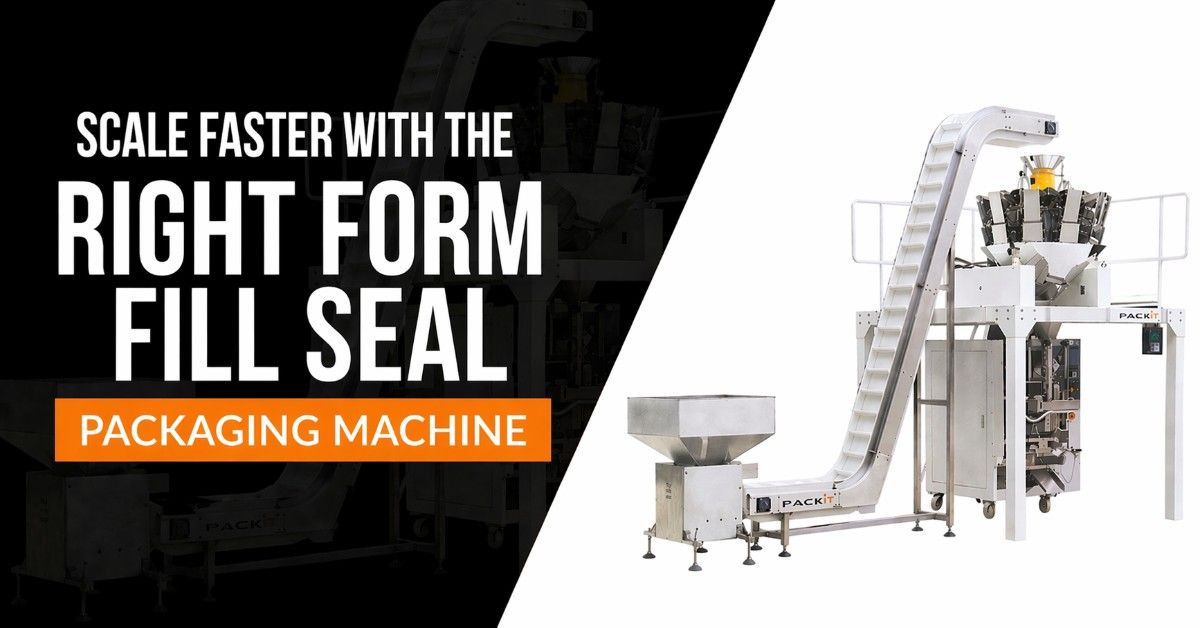
A form fill seal packaging machine performs three functions in a single automated sequence. It takes a flat roll of packaging film and forms it into a pouch shape using a forming collar or tube. It fills that formed pouch with your product using an integrated filler system. It then seals the filled pouch closed using heat sealing jaws and cuts it to the correct length before discharging it onto the output conveyor.
All three steps happen continuously, cycle after cycle, without manual intervention. This is fundamentally different from systems that use pre-made pouches, which require separate pouch handling, opening, and loading steps that introduce both time inefficiency and inconsistency.
The vertical variant, commonly known as a VFFS machine (Vertical Form Fill Seal), is the most widely used configuration in the food industry. The film travels vertically downward through the machine, which makes it well-suited for granular, powder, and solid product types that can be gravity-fed or metered into the forming tube from above.
The result is a compact, high-speed, and highly consistent packaging output that manual or semi-automatic systems simply cannot replicate at scale.
The Scaling Problem That FFS Technology Solves
Here is what scaling actually looks like on a production floor before a proper FFS machine is in place.
A growing namkeen brand in Delhi NCR is running two manual packing stations with four workers each. Output is around 80 to 100 kg per shift. Seal quality depends on operator attention. Fill weights vary by 8 to 12 grams per pouch because the scooping is done by hand. A retailer flags inconsistent net weight labeling. A distributor in Mumbai returns a batch because three pouches in a carton had weak seals.
The brand is growing in revenue but shrinking in margin. More volume means more labor, more variability, more complaints, and more rework.
This is not a workforce problem. This is an infrastructure problem. And a form fill seal packaging machine is the infrastructure solution.
After installing a mid-range VFFS machine with an appropriate filler system, that same brand can produce 250 to 350 kg per shift with two operators, consistent fill accuracy within acceptable tolerances, and seal quality that does not depend on whether the right person showed up that morning.
The return on that infrastructure investment does not take years to materialize. For most growing businesses, it starts showing up within weeks.
Matching the Machine to What You Are Packing
The single most important variable in choosing any form fill seal packaging machine is your product. Every other specification flows from this.
For free-flowing granular products like sugar, salt, popcorn, or small candies, volumetric cup fillers are the standard choice. They are fast, reliable, and well-suited to products that move predictably through a filler tube.
For fine powders like turmeric, atta, protein powder, coffee, or chemical blends, auger filler systems provide the accuracy and containment that granular fillers cannot. A servo-controlled auger filler on a well-calibrated VFFS machine can hold fill weight variation to within a gram or two across thousands of cycles.
For irregular solid products like potato chips, namkeen, dry fruits, breakfast cereals, or mixed snacks, a multihead weigher integrated with the VFFS machine is the right combination. The multihead weigher handles the portioning task with gentle product handling and high accuracy, feeding precise batches into the forming tube at speed.
Getting this pairing right is not optional. A volumetric cup filler used on a fine powder product will give you inaccurate fills and dust contamination at the seal zone. An auger filler used on chunky irregular solids will jam and wear prematurely. The product dictates the filler. The filler dictates the machine configuration.
Film and Pouch Format: Decisions That Affect Everything Downstream
A form fill seal packaging machine works with a roll of packaging film that it forms into pouches on the fly. This means the machine must be compatible with the specific film structure your product and brand require.
Common film types used in FFS applications include BOPP laminate for dry snacks and namkeen, metalized polyester laminate for products requiring higher barrier protection, co-extruded multilayer films for products with extended shelf life requirements, and paper-based laminates for brands with sustainability positioning.
Each film type has a different sealing temperature range, a different coefficient of friction through the forming collar, and different behavior under the sealing jaws. A machine set up for one film type may need jaw temperature and speed adjustments to run a different film cleanly.
Before committing to a machine, confirm that it has been tested on your specific film type or a close structural equivalent. Ask for documented sealing temperature ranges and request a trial run if you are introducing a film type the manufacturer has not previously validated on that model.
Pouch format is equally important. Pillow pouches are the most common and the most straightforward for FFS machines to produce. Gusseted pouches provide more shelf-stable volume and are increasingly popular for snacks, cereals, and dry foods. Stand-up pouches require specific machine configurations including bottom gusset forming capability. Stick packs for single-serve applications require a dedicated machine format.
Know your required pouch format before you specify the machine. It determines the forming collar design, the jaw geometry, and in some cases the entire machine architecture.
Speed Targets and Realistic Output Planning
Every automatic packaging machine comes with a rated maximum speed. That number is not your actual production output. It is a ceiling measured under ideal conditions.
Your real output will be determined by your product density and flow characteristics, your pouch size and film type, your filler cycle time, and your factory environment including ambient temperature and operator proficiency.
A machine rated at 80 pouches per minute running a 100-gram namkeen pouch with a multihead weigher in a well-managed production environment might realistically deliver 60 to 70 pouches per minute after accounting for minor stoppages, changeover transitions, and film splicing.
That is still a transformative output compared to manual packing. But planning your capacity around the rated maximum rather than the realistic operational output is a common mistake that leads to unmet production targets and frustrated operations teams.
When evaluating any form fill seal packaging machine, ask the manufacturer for output benchmarks specific to your product type and pouch dimensions. A manufacturer who gives you honest, conservative numbers is one you can plan around confidently.
Also think about shift structure. A machine running at 65 pouches per minute across two eight-hour shifts delivers a very different monthly output than one running at 50 pouches per minute across three shifts. Match your machine capacity to your shift model, not just your peak demand.
Seal Integrity: The Quality Metric That Reaches Your Customer
Every other specification on your packaging line is invisible to the end customer. Seal quality is not.
A pouch that arrives at a retailer with a partial seal failure, a bubble in the seal bead, or a seal that tears before the consumer is ready to open it is a brand problem, not just a production problem. It triggers returns, distributor complaints, and in competitive retail environments, delisting risk.
Strong, consistent seal quality from a form fill seal packaging machine comes from three things working together: consistent jaw temperature across the full jaw width, consistent jaw pressure applied evenly on every cycle, and consistent dwell time that is appropriate for the film structure being sealed.
Servo-driven sealing systems deliver this consistency because the jaw motion, pressure, and timing are all electronically controlled and repeatable cycle after cycle. Older mechanical sealing systems introduce variability as mechanical components wear, as jaw springs fatigue, and as cam profiles develop play over time.
For any product going into retail or modern trade channels where shelf presence and distributor confidence matter, servo sealing is not a luxury. It is a production quality baseline.
Ask specifically about jaw construction material, temperature uniformity across the jaw face, and what the manufacturer's recommended jaw maintenance interval is. These questions reveal how seriously the engineering team thought about long-term sealing performance, not just initial demonstration quality.
PLC Automation and Operational Intelligence
A modern form fill seal packaging machine is not just a mechanical system. It is an automated production platform, and the intelligence built into its control system directly affects how efficiently it can be operated, maintained, and scaled.
PLC-based control systems in leading machines offer recipe storage that allows operators to recall saved settings for different product and pouch combinations with a few touchscreen inputs rather than manual re-adjustment of multiple parameters. This dramatically reduces changeover time and eliminates the parameter drift that happens when settings are re-entered manually from memory or from paper records.
Real-time fault diagnostics on the HMI display reduce the time between a fault occurring and a trained operator resolving it. Instead of observing symptoms and tracing causes manually, the operator sees a specific fault code that directs attention to the right location immediately.
Production counters, speed tracking, and downtime logging give production managers visibility into actual machine utilization versus planned utilization. This data is foundational to making informed decisions about when to add a shift, when to schedule maintenance, and where inefficiencies are occurring in the production cycle.
As manufacturing operations mature, this operational intelligence becomes increasingly valuable. Businesses that start with a well-automated automatic packaging machine early in their scaling journey build the operational habits and data practices that support continued growth.
Changeover Capability for Multi-SKU Operations
If your business runs more than one product or more than one pouch size, changeover capability deserves serious attention in your machine evaluation.
A form fill seal packaging machine that takes three hours to change over between a 50-gram and a 200-gram pouch size effectively costs you three hours of production every time you need to switch. For a business running five or six SKUs across a single machine, that accumulated changeover time can represent a significant fraction of total available production time.
Leading machines minimize changeover time through standardized mechanical adjustment points with clear measurement references, tool-free or minimal-tool former and jaw changes for common size transitions, recipe-based PLC settings that restore all electronic parameters instantly, and clear operator documentation that supports consistent changeover execution without relying on institutional memory.
Ask specifically about the changeover process during any machine evaluation. Have the manufacturer demonstrate a complete changeover, not just describe it. Watch how long it actually takes and assess whether a trained operator from your team could execute it reliably.
For businesses with complex SKU mixes, the ability to change over quickly and accurately is a competitive capability, not just an operational convenience.
VS PacKit: Engineering for Real Production Environments
VS PacKit by VS International has spent more than two decades building form fill seal packaging machines that operate in the real conditions of Indian food and FMCG manufacturing, not in controlled demonstration environments.
Their installed base includes some of India's most recognized and demanding brands. Haldiram's, Parle, Patanjali, Bikanervala, Cadbury, Adani, Ruchi, and Weikfield all run VS PacKit machines on production floors where output targets, quality standards, and operational reliability are non-negotiable business requirements.
That track record is not built on specification sheets. It is built on machines that show up, run consistently, seal cleanly, fill accurately, and keep producing across shift after shift in factories that cannot afford significant unplanned downtime.
VS PacKit machines are engineered with servo-driven sealing systems for consistent seal quality, PLC automation with intuitive touchscreen interfaces for efficient operation and fast changeover, and robust mechanical construction designed for the continuous operation demands of high-volume production environments.
Their product range covers the full scope of modern FFS packaging requirements. The Komet 81 delivers reliable intermittent motion VFFS performance for a broad range of food products. The Indus 5000 brings cutting-edge intermittent motion capability for operations demanding higher throughput and tighter fill accuracy. The GT-5S serves high-speed continuous motion applications where maximum output per shift is the primary requirement. The Duplex Packaging System enables parallel line operation for businesses that need doubled capacity without doubling floor space. The Komet Sprint brings agility for operations that prioritize fast changeover across multiple SKUs.
Integrated filler solutions including Servo Auger Fillers for powder products and Volumetric Cup Fillers for granules complete the packaging line picture, while the SP-914 Stick Pack Machine addresses the growing single-serve segment across food and consumer goods.
With two design patents granted and more in progress, VS PacKit's engineering investment reflects a commitment to advancing the technology rather than simply maintaining it. For manufacturers across India building packaging lines that need to perform today and scale tomorrow, VS PacKit brings the engineering depth, operational experience, and support infrastructure to make that ambition real.
What Scaling Businesses Should Do Before Buying
Walk your current production line before you evaluate any machine. Identify where the actual bottlenecks are. Measure your current output. Document your current labor cost per unit packed. Quantify your current seal failure rate and fill weight variance. This baseline makes the case for investment clear and helps you set realistic performance targets for the new machine.
Define your growth target for the next two to three years, not just your current need. A machine that meets today's volume but has no headroom for growth will feel undersized faster than you expect.
Test your actual product and film with the manufacturer before committing. A live trial with your materials under realistic conditions tells you more than any specification document.
Evaluate after-sales support as seriously as machine specifications. Visit the manufacturer's service infrastructure. Ask for references from existing customers in your region and speak to them about their real experience.
And choose a manufacturer who treats the relationship as a long-term partnership, not a transaction. The machine will be on your floor for ten or more years. The manufacturer you choose will be your partner for every service call, every upgrade, and every new machine decision in that time.
Final Thoughts
Scaling a food or FMCG business is not just about selling more. It is about building the operational capability to deliver more, consistently, at quality standards that protect the brand you are building.
The right form fill seal packaging machine is not an expense on that journey. It is the infrastructure that makes the journey possible at the pace your market opportunity demands.
VS PacKit by VS International has built that infrastructure for some of India's most successful food and FMCG manufacturers. If you are ready to remove the packaging bottleneck and build a production line that scales with your ambition, the VS PacKit team is ready to help you find the right machine for exactly where you are going.
Contact VS PacKit today and take the first step toward a packaging line that is built for growth.