

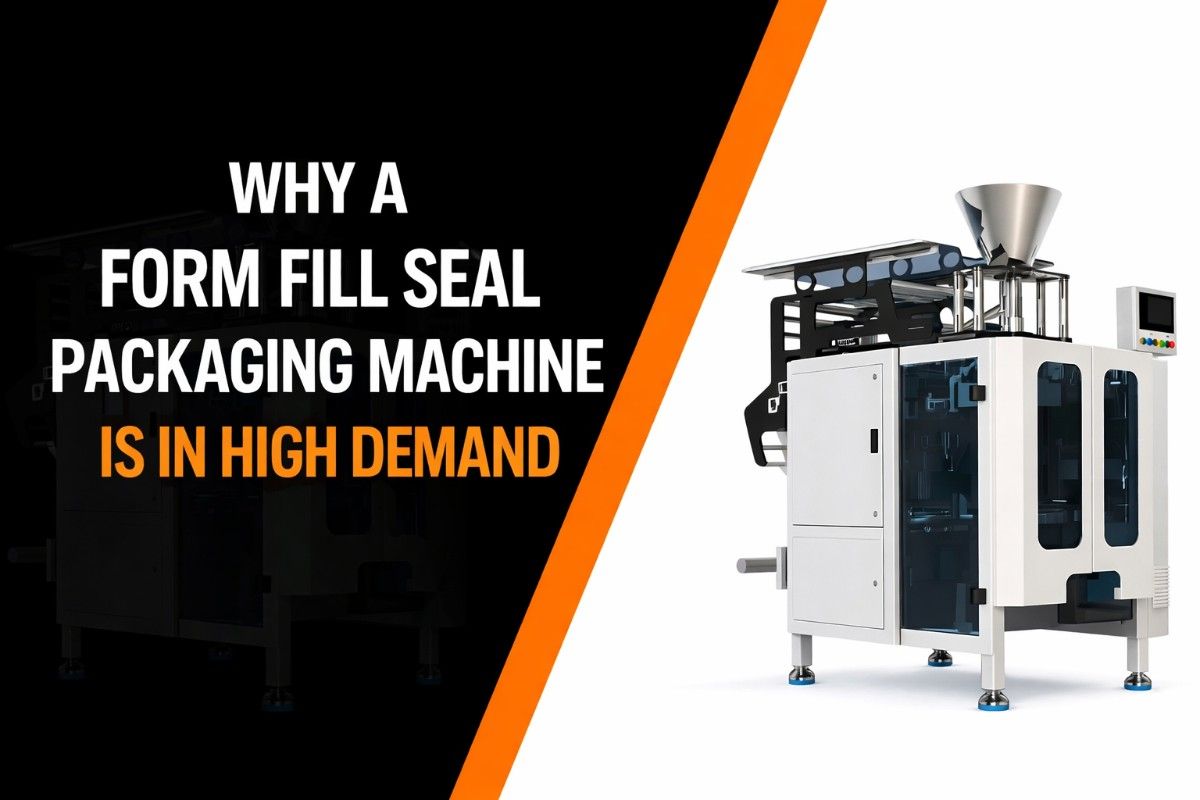
If you walk into a local grocery store today, you are surrounded by the work of a modern engineering marvel. From the 5 rupee packet of spicy bhujia to the 5kg bag of premium basmati rice, almost every flexible pouch you see was likely created by a Form Fill Seal Packaging Machine.
But why is this specific technology suddenly the talk of every manufacturing unit in India? In the past, small businesses could get by with manual labor or semi-automatic sealers. Today, the market has changed. Consumers demand perfect hygiene, retailers want standardized sizes, and business owners are fighting rising labor costs.
This shift has turned what used to be a luxury into a fundamental necessity. Whether you are a startup founder or a seasoned factory manager, understanding why this machine is in high demand is the first step toward scaling your production effectively.
What Exactly Is the Form Fill Seal Process
To understand the demand, we first need to look at what the machine actually does. In simple terms, it is an all in one solution. Most modern variants follow the Vertical Form Fill Seal or VFFS machine logic.
The machine starts with a flat roll of film. It forms that film into a tube, fills it with your product, and then seals it shut. All of this happens in a single, continuous vertical motion. This integration is the primary reason for its popularity. Instead of having one person to make bags, another to weigh the product, and a third to seal them, the machine handles the entire lifecycle of the package in seconds.
The Primary Drivers of Market Demand
There are several practical reasons why businesses are racing to install these industrial packaging solutions on their factory floors.
The Push for Untouched by Hand Quality
Hygiene is no longer a buzzword. It is a baseline requirement. In industries like spices (masalas) or dairy products, any human contact during the packaging phase increases the risk of contamination. A Form Fill Seal Packaging Machine creates a closed loop environment. This ensures that the first time the product is exposed to air is when the customer opens the packet at home.
Eliminating the Hidden Cost of Overfilling
When you rely on manual weighing for products like tea or candy, errors are inevitable. Even a 2 gram overfill per packet might seem small, but over 10,000 packets, you are giving away 20kg of product for free. The precision of an automatic packaging machine ensures that your margins stay protected by delivering exactly what is promised on the label.
Solving the Labor Shortage in Manufacturing
Managing a large workforce for manual packaging is a logistical nightmare. Issues like absenteeism, training turnover, and inconsistent sealing quality can halt your production. High demand for these machines stems from the need for a reliable, "always on" worker that does not take sick leaves and produces identical results every single shift.
How Vertical Technology Saves Space and Money
Space is expensive. Most traditional packaging lines are horizontal and take up a massive amount of floor area. This is where the VFFS machine shines. Because it works vertically, it occupies a tiny footprint.
Small businesses operating out of compact urban units find this particularly valuable. You can fit a high speed production line in a corner of your workshop, leaving more room for raw material storage or processing equipment. This spatial efficiency is a major factor driving the high demand among Indian MSMEs.
Real World Use Cases Across Different Industries
The versatility of the pouch packing machine means it is not limited to just one type of product.
The Snack and Namkeen Industry
Crunchy items like chips or kurkure need delicate handling and nitrogen flushing to maintain freshness. Modern machines can puff the bags with nitrogen before the final seal, extending shelf life from weeks to months.
Powders and Fine Granules
Packing turmeric, chili powder, or coffee requires a dust free environment. Specialized machines use auger fillers to ensure that the fine dust does not interfere with the seal, keeping the package airtight and the factory floor clean.
Hardware and Manufacturing
It is not just for food. Factories packing screws, plastic components, or even small toy parts are switching to these machines to standardize their kits and speed up the dispatch process.
Evaluating the ROI and Packaging Machine Price
A common question among business owners is whether the investment is worth it. While the initial packaging machine price is higher than a manual sealer, the Return on Investment (ROI) is usually achieved much faster than expected.
When you calculate the savings from reduced labor, zero product wastage, and the ability to fulfill much larger orders, most machines pay for themselves within 10 to 18 months. After that period, the machine essentially adds to your daily profit margins by lowering your cost per pouch.
Decision Factors When Choosing Your Machine
If you are looking to join the trend, keep these technical points in mind to ensure you get the right fit for your facility.
-
Speed Requirements: Do you need 30 pouches per minute or 90? Match the machine to your upstream production speed.
-
Material Compatibility: Ensure the machine can handle the specific laminates you want to use, whether they are plastic, foil, or eco friendly films.
-
Accuracy Levels: For high value items like cardamom or saffron, accuracy is more important than speed. Look for machines with advanced weighing sensors.
-
Durability and Spares: A machine that breaks down and has no available spare parts is a liability. This is why many prefer local manufacturers with a solid service record.
Why VS PacKit Is a Trusted Name in Automation
In the landscape of industrial packaging solutions, VS PacKit stands out as a reliable partner for growing businesses. They have mastered the balance between advanced technology and user friendly design.
VS PacKit provides:
-
Advanced VFFS Technology: Their machines are designed with high precision components that ensure consistent sealing and accurate filling every time.
-
Reliability: Built to handle the rigorous conditions of Indian manufacturing units, these machines are durable and require minimal maintenance.
-
Custom Solutions: They understand that a namkeen manufacturer has different needs than a detergent powder startup. They provide tailored configurations to suit specific product flows.
-
Trusted Support: Being a home grown brand, they offer excellent after sales service and readily available spare parts, which is a critical factor for any production line.
Common Problems and Smart Solutions
Even the best technology can face hurdles if not managed correctly. Here are a few common issues factories face and how modern machines solve them.
Film Tracking Issues
Sometimes the roll of plastic moves off center, leading to crooked pouches. Modern machines from leaders like VS PacKit include automatic film tracking sensors that adjust the alignment in real time without stopping the machine.
Sealing Failures
Leaky seals are often caused by inconsistent heating. High demand machines now feature digital temperature controllers that maintain the exact heat required for a perfect weld, regardless of the factory temperature.
Frequently Asked Questions
1. What is the difference between FFS and VFFS?
FFS is the general category of Form Fill Seal. VFFS specifically refers to the Vertical version. There is also HFFS or Horizontal, which is usually used for solid items like biscuits or soap bars.
2. Can one machine pack different sizes of pouches?
Yes, most machines are versatile. You may need to change the "forming collar" or adjust the settings on the PLC screen to switch from a 100g pack to a 500g pack.
3. Does a Form Fill Seal Packaging Machine require a lot of power?
Most modern machines are designed for energy efficiency. They typically run on standard industrial power connections and use power primarily for the heating elements and the motors.
4. Is it difficult to train staff to operate these machines?
Not at all. Most systems come with a touchscreen interface that is very intuitive. After a few days of training, a regular factory worker can manage the operation, cleaning, and basic troubleshooting.
What to Do Next
The high demand for the Form Fill Seal Packaging Machine is a clear signal that the industry is moving toward total automation. If your competitors are moving to faster, cleaner, and more accurate packaging, staying manual could put your business at a disadvantage.
Start by auditing your current wastage and labor costs. If you find that packaging is your biggest bottleneck, it is time to look at an automated solution.
Would you like me to help you calculate the potential ROI for your specific production volume? By choosing a partner like VS PacKit, you are not just buying a machine. You are investing in a system that allows your business to grow without the traditional growing pains of manual manufacturing. Take the leap into automation and watch your production capacity soar.