

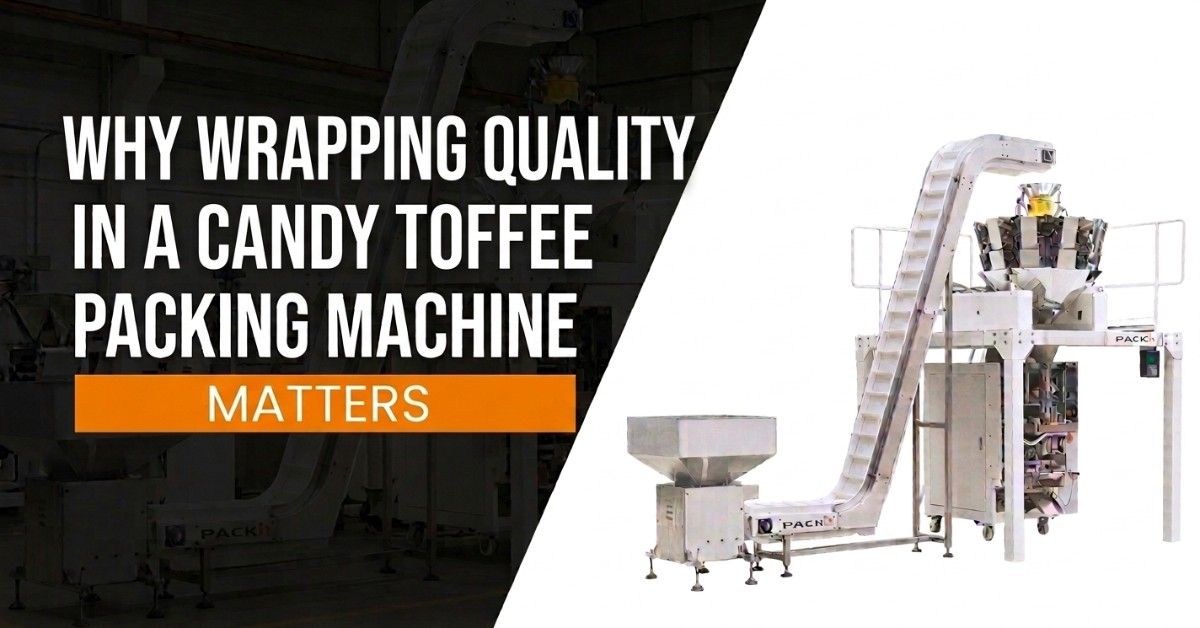
There is a moment of truth on every production line. It happens when a freshly wrapped candy slides down the chute and lands in a collection bin. If the seal holds, the product is ready for the market. If it does not, you are looking at wasted ingredients, stalled production, and a potential quality issue that could reach your customers.
In the world of confectionery and small-batch manufacturing, the wrapping process is often underestimated. Businesses focus on mixing, cooking, and shaping the product. But the reality is that a poorly sealed candy toffee can ruin a brand’s reputation faster than a bad recipe. That is where a reliable Candy Toffee Packing Machine becomes the silent guardian of your business.
The Hidden Cost of a Weak Seal
For small businesses and startups, every gram of product counts. Imagine running a namkeen or spice packaging unit where even a tiny pinhole in the pouch leads to staleness within days. The same applies to candies and toffees. These products are sensitive to moisture, heat, and air. If the packaging fails, the product inside loses texture, flavor, and shelf life.
Factories that run high-speed lines cannot afford to stop every few minutes to clear a jam caused by a bad seal. Production efficiency drops, and maintenance costs rise. Over time, the cumulative loss from poor sealing can outweigh the initial savings of buying a lower-grade machine.
What Makes Wrapping Quality Non-Negotiable
1. Freshness and Shelf Life
Candies and toffees rely on airtight packaging to maintain their intended taste. A Candy Toffee Packing Machine with precise temperature control and consistent pressure ensures that each pouch or wrap is hermetically sealed. This directly extends shelf life and reduces returns from retailers.
2. Brand Perception
When a customer opens a packet and finds the product dried out or the seal already broken, they do not blame the machine. They blame the brand. In competitive markets like FMCG, first impressions matter. A clean, tight seal signals professionalism and quality.
3. Operational Efficiency
An automatic packaging machine that delivers consistent sealing reduces downtime. Operators spend less time adjusting settings or clearing misfeeds. For a growing business, this reliability means you can scale production without constantly troubleshooting packaging issues.
Candy vs. Namkeen: Different Products, Same Sealing Challenges
While candy and toffee have their own texture and shape, the challenges are similar to other food industries. Consider a unit producing spicy namkeen or fried snacks. The oil content can affect sealing if the machine’s jaw temperature is not calibrated correctly. Similarly, powdered products like atta or spices require dust-proof sealing to prevent leakage.
A VFFS machine vertical form fill seal handles these diverse requirements by forming the pouch, filling it, and sealing it in one continuous motion. Whether you are packaging candies, toffees, or even detergent powder, the core principle remains: the seal must be flawless.
Key Factors That Determine Wrapping Quality
Machine Type and Motion System
Intermittent motion systems are common for smaller operations. They pause as each seal is made, offering precision for delicate products like toffees. Continuous motion systems, on the other hand, are built for high-speed lines where output volume is the priority. Choosing the right motion system for your production volume directly affects seal consistency.
Sealing Jaw Technology
Heating elements and jaw pressure determine how well the packaging material fuses. Modern machines use servo-driven sealing, which allows for exact control. This is especially important when switching between different film materials or product types.
Material Compatibility
Not all packaging films work the same way. A Candy Toffee Packing Machine should offer flexibility to handle laminates, polyethylene, and other common films. Without proper compatibility, you risk weak seals or wrinkled packaging that looks unprofessional.
From Startup to Scale: A Real-World Example
A small business in Maharashtra started producing handmade toffees for local markets. Initially, they used a semi-automatic sealer. As demand grew, they upgraded to a fully automatic packaging machine. The difference was immediate. Output tripled, but more importantly, the rejection rate from poor seals dropped by over 80%. The owner noted that the ability to control seal temperature digitally meant they could maintain consistent quality even when different operators ran the shift.
This is a common story across industrieswhether it is a spice company in Gujarat or a snack food startup in Delhi. Investing in a reliable VFFS machine early on prevents the growing pains that come with scaling up.
Comparing Sealing Technologies: What to Look For
When evaluating industrial packaging solutions, the sealing mechanism should be a top priority. Here is a simple comparison of common sealing technologies found in packaging machines:
| Feature | Basic Heat Seal | Servo-Controlled Seal |
|---|---|---|
| Precision | Manual adjustment | Digital, programmable |
| Consistency | Varies with operator | Uniform across shifts |
| Film Compatibility | Limited | Wide range |
| Maintenance | Frequent calibration | Low, predictable wear |
| Best For | Low-volume, single product | High-mix, high-volume |
For businesses handling multiple SKUs like candies, toffees, and even dry fruitsa servo-driven system offers the flexibility to adapt quickly without compromising on seal strength.
Avoiding Common Packaging Pitfalls
Even with a good machine, certain mistakes can compromise wrapping quality. Here are a few to watch out for:
-
Ignoring Temperature Fluctuations: Sealing jaws need time to reach the correct temperature. Starting a shift without warm-up leads to weak seals.
-
Using Incorrect Film Tension: Too much tension tears the film; too little causes wrinkles. Both affect the seal.
-
Skipping Routine Cleaning: Residual sugar from candies can build up on sealing jaws, causing sticking and incomplete seals.
-
Overlooking Operator Training: Even an automatic packaging machine requires skilled operators who understand settings and troubleshooting.
Why Businesses Prefer Advanced VFFS Technology
The shift toward automation is driven by more than just speed. It is about consistency. A modern VFFS machine integrates PLC controls that store settings for different products. If you run candies in the morning and shift to toffees after lunch, the machine recalls the optimal parameters with the push of a button.
This level of control reduces waste and ensures that every pouch meets the same quality standard. For businesses supplying to larger retailers or e-commerce platforms, this consistency is not optionalit is expected.
Where This Machine Is Used
While the focus here is on candies and toffees, the versatility of a well-designed Candy Toffee Packing Machine extends to multiple industries:
-
Confectionery: Candies, toffees, chocolates, chewing gum
-
Snack Foods: Chips, namkeen, roasted nuts
-
Powders: Spices, protein powder, atta, detergent
-
Dry Fruits: Raisins, almonds, dates
-
Pharmaceuticals: Powders, granules, tablets in pouches
This cross-industry applicability makes the machine a valuable asset for contract packers and co-manufacturers who serve diverse clients.
Making the Right Choice: A Simple Guide
If you are evaluating a packaging machine purchase, here are practical steps to ensure you prioritize wrapping quality:
-
Test Your Film: Run your actual packaging material on the machine before buying. Observe seal strength and appearance.
-
Check the Seal Width: A wider seal offers better protection, especially for products prone to moisture absorption.
-
Evaluate Changeover Time: How quickly can the machine switch from candies to toffees or to a different pouch size? This matters for operational flexibility.
-
Look at Support and Spares: Even the best machine needs maintenance. Ensure the manufacturer provides timely support and spare parts availability.
-
Consider Total Cost of Ownership: A lower packaging machine price might be tempting, but factor in downtime, reject rates, and maintenance costs over five years.
Common Questions About Packaging Machine Performance
How does film type affect sealing quality?
The film’s thickness, coating, and material composition directly influence how well it seals. Laminated films generally offer better barrier properties but require precise heat control. A flexible VFFS machine allows you to adjust settings per film type.
Can the same machine handle both sticky toffees and dry candies?
Yes, with the right feeding system. Sticky products may require a specialized feeder or cooling section before sealing to prevent adhesion. A well-designed automatic packaging machine accommodates such variations through adjustable filling mechanisms.
What maintenance routine ensures consistent sealing?
Daily cleaning of sealing jaws, weekly calibration checks, and monthly inspection of heating elements are standard best practices. Keeping a log of settings for each product also helps maintain consistency when switching production lines.
VS PacKit: Reliable Partner for Packaging Excellence
When precision and durability matter, manufacturers turn to trusted names. VS PacKit, backed by over two decades of experience from VS International, offers advanced VFFS technology tailored to the needs of Indian industries. Their range includes servo-driven systems that deliver consistent sealing across diverse products from candies and toffees to namkeen and spices.
What sets VS PacKit apart is the focus on practical reliability. Their machines are built for the realities of factory floors: high humidity, varying film qualities, and long operating hours. With user-friendly PLC controls and robust construction, they help businesses minimize waste and maximize output.
For startups and established manufacturers alike, choosing a packaging partner that understands local conditions and provides dependable support makes a significant difference in long-term success.
Final Thoughts: What to Do Next
Wrapping quality is not just about aesthetics. It directly impacts product freshness, operational efficiency, and brand credibility. Whether you are packaging candies, toffees, or other FMCG products, investing in a machine that delivers consistent seals is one of the smartest decisions you can make.
Before making a purchase, evaluate your production volume, product variety, and long-term growth plans. Test the machine with your own materials. And choose a manufacturer known for reliability and after-sales support.
If you are looking for a Candy Toffee Packing Machine that combines precision with durability, exploring the range from VS PacKit is a great place to start. Their expertise in VFFS and pouch packing machines ensures you get a solution built for consistent performance, shift after shift.
Ready to improve your packaging line with reliable machinery? Explore the range of VFFS and automatic packaging machines from VS PacKit to find the right fit for your production needs.